Day 1
Understand
Foundations
Monday 19 October
11:00 to 17:10 SAST
7 sessions
Keynote
Indigenomics Africa: A Continental Economy Driven by Indigenous Ingenuity
Week 2026Indigenomics Africa Week · 19–23 October 2026 · Online
Register to attend → (opens in a new tab)PAN-AFRICAN INDIGENOUS ECONOMIC DESIGN & DELIVERY
Capital, knowledge and markets built on African Indigenous knowledge systems, governed by the people who live them.
Annual convening
Where projects, capital, policy and partners convene to reflect, learn and set the commitments for developing the African Indigenous Economy.
2026 theme
One Health, One Economy: Africa's Indigenous Wellbeing Future
Four pillars
Three tracks
Indigenomics Africa Week · Convening programme
Online · 19–23 October 2026 · All times SAST (UTC+2)
35 sessions: 23 panels, 4 fireside conversations, 3 masterclasses, and 5 keynotes. Every day opens and closes in plenary.
Day 1
Foundations
Monday 19 October
11:00 to 17:10 SAST
7 sessions
Keynote
Indigenomics Africa: A Continental Economy Driven by Indigenous Ingenuity
Day 2
Sovereignty
Tuesday 20 October
11:00 to 16:10 SAST
7 sessions
Keynote
Sovereignty by Design: Engineering Authority, Accountability and Collective Leadership
Day 3
Community
Wednesday 21 October
11:00 to 17:10 SAST
8 sessions
Keynote
Capable and Productive Communities: The Engine Room of the African Indigenous Economy
Day 4
Indigenous Innovation
Thursday 22 October
11:00 to 16:10 SAST
7 sessions
Keynote
Tools of Practice: Building the Cutting Edge for Indigenous Continuity
Day 5
Financing
Friday 23 October
10:00 to 15:30 SAST
6 sessions
Keynote
Our Capital, Our Terms: A Financing Architecture for the African Indigenous Economy
65 speakers expected across the Week, based on the current line-up, subject to confirmation.
Indigenomics Africa Week


Why this matters
The wealth was never missing. It lives in our land, our knowledge and our people. When the people who hold it own it, villages become places of opportunity, not departure.
The case in 2 minutes
The problem, the mission and the objectives of Indigenomics Africa: from village to one continental market, with capital that stays and regenerates.
Playing silently on loop.
Central African rainforest.
The non-extractive sequence
No research before recognition. No commercialisation before community ownership.
Knowledge is the asset base.
Indigenous knowledge is documented and evidenced, with clear community title.
Governance secures the licence.
Authority, consent and custodianship come first, giving every project legal and social standing.
Enterprise and returns follow.
Ventures, products, infrastructure and markets, with communities co-owning the upside.

Drakensberg, South Africa. Photo: Bernard Dupont, CC BY-SA 2.0
From village to market
Serviced, connected, community-governed economic nodes.
Villages aggregated into supply, skills and demand.
Processing, manufacturing, certification and logistics.
Community-owned products into AfCFTA's 1.3-billion-person market.
Institutional architecture
A year-round platform covering consent, capability, innovation and capital.
Indigenous governance authority, consent frameworks and community sovereignty. It governs knowledge and benefit separately from investment.
Practitioner pathways, enterprise training, workforce development and community participation.
Research, validation, codification, production and digital infrastructure for community-owned industries.
IP pathways, blended finance, community investment vehicles and value-retention mechanisms.
Health is the first market entry point.
Year-round platform

Innovation
A working hub where practitioners, researchers and builders turn Indigenous knowledge into products, ventures and tools.

Knowledge and IP
Knowledge codified in its own worldview and language, registered as community-owned IP through Community Sovereign Trusts with IPROSA.

Rural infrastructure
Transforming rural African villages to smart villages with connectivity, energy, water, food, health and enterprise coordinated into place-based economies, with aggregated demand and a repeatable deployment model.

One Health · Phase 1 sector
A social business with two verticals. iCamagu Health runs smart teaching clinics and an AI-native, Indigenous knowledge-integrated health information system. iCamagu Medicine cultivates and manufactures natural foods and medicines, making Indigenous formulations manufacturing-ready with practitioners.
Our reach
Phase 1 begins on South Africa's Wild Coast. The platform is built to grow across all 54 nations.
Pilot and Phase 1
Pilot and Phase 1, Sunrise in the South. Wild Coast SEZ case with a signed R1.405bn pipeline. Indigenous health and wellbeing is the first sector.
People and place



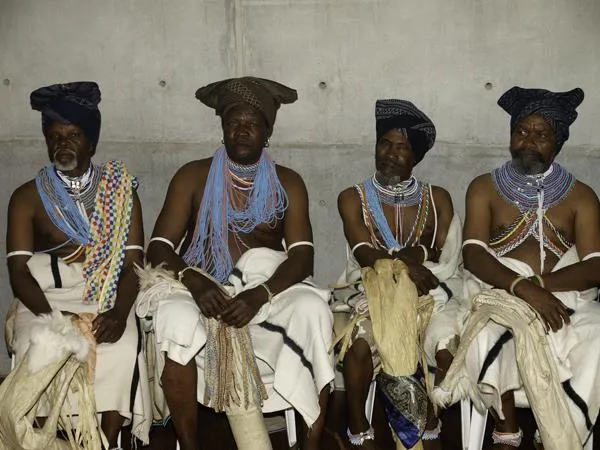
Reference imagery under Creative Commons licences. Community-consented portraits with named people will replace these as the library grows.
A Sahel river bend.
Governance and partners
The Indigenomics Big Sister Collaboration Agreement, signed on 29 September 2026, sets a fifty-year vision for a continental Indigenous economic design and delivery platform.
50 years
FOUNDING PARTNER
Vancouver
Steward of the Indigenomics methodology, framework and global relationships.
LEAD
Indigenous Professions of Southern Africa NPC
Continental steward of Indigenomics Africa: community engagement, programming, partnerships and delivery.
Accountability
Both parties
Guides governance, annual planning and accountability.
Consent before capital
The Sovereign Circle governs knowledge and benefit separately from investment. Free, prior and informed consent, aligned with UNDRIP, comes first. Sacred or restricted knowledge is never described or traded. Every decision is tested against one question: does it increase the share of value communities own?
COLLABORATORS


Four pathways
A sequenced, governed and measured pipeline of community co-owned assets.
Start here →Governments, practitioners, enterprisesIndigenous economy zones, IKS frameworks, workforce and supply capacity.
Start here →Universities, technology partners, civil societyValidation with communities, data sovereignty and delivery on the ground.
Start here →Corporates and industryFormalised Indigenous enterprises ready to supply, manufacture and trade.
Start here →Nothing on this site is an offer of securities or a promise of returns. Accord participation is not a commitment to finance; each institution decides on its own mandate and due diligence.
Publications and resources
Briefing note
2026
The platform, its architecture and how institutions take part.
Whitepaper
2026
Sizing the opportunity and the governance that makes it bankable.
Framework
September 2026
The fifty-year vision shared by IPROSA and the Indigenomics Institute.
Programme
October 2026
Tracks, sessions and speakers for 19–23 October 2026, online.
Invitation
Newsletter
Pipeline news, publications and Indigenomics Africa Week updates. A few times a year, never more.